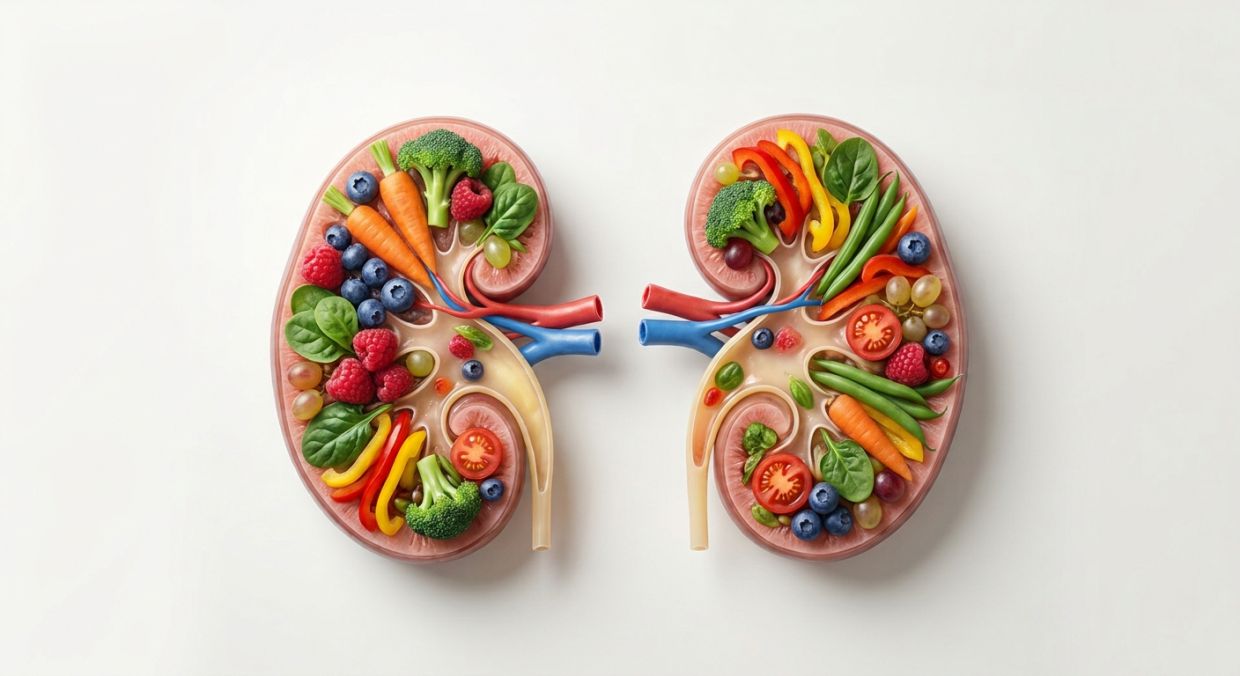
A decade-long clinical trial has found that a diet built around certain fruits and vegetables may cut hospital visits for people with chronic kidney disease (CKD) whose bodies hold too much acid, The Star reports. The study tracked 108 adults with stage 3 CKD and metabolic acidosis, a condition in which acid builds up in the body. Its results were presented at the American Society of Nephrology (ASN) Kidney Week, held from October 21 to 25, 2026, in Denver, Colorado.
Why it matters
Metabolic acidosis is a common complication of kidney disease, and managing it is a recurring cost for patients and health systems alike. The trial set out to test whether food alone could do the job normally handled by medication. According to The Star, the findings point to diet as a practical lever in kidney care, one that may carry benefits beyond the individual patient.
The study divided participants into three groups. One received fruits and vegetables chosen to lower acid levels. A second was given sodium bicarbonate, a treatment commonly prescribed to counter excess acid in people with kidney disease. The third continued with standard medical care. Both the produce diet and the sodium bicarbonate were calibrated to bring dietary acid down by 50 percent, which let researchers compare the two approaches on equal footing over the long term.
What ten years of follow-up showed
Across the three groups, researchers logged 115 hospital admissions and 166 emergency department visits during the study period. The differences between groups were substantial. The Star reports that, compared with the usual care group, those on the fruit-and-vegetable diet had 14 hospitalisations against 64, 20 emergency department visits against 88, and 4 cases progressing to dialysis against 16.
The sodium bicarbonate group, by contrast, showed no difference from usual care on any of these measures. That result is notable because sodium bicarbonate is an established way to treat excess acid. In this trial, it did not translate into fewer hospital trips or less dialysis progression when set against standard care.
The pattern suggests the benefit seen in the produce group may stem from something beyond acid reduction alone, though the study as reported does not establish a mechanism. What it does show is an association between the fruit-and-vegetable approach and markedly lower use of hospital services over ten years.
A caution for patients
The findings come with a clear warning. The Star notes that people with CKD should speak with their doctors before making major changes to what they eat. Some fruits and vegetables are high in potassium, and kidneys that cannot filter it out effectively may let it reach dangerous levels in the body. A diet that helps one patient could therefore pose a risk to another, which makes medical guidance essential before any switch.
The study's corresponding author, American neurologist Dr Nimrit Goraya, framed the results as an argument for looking at diet on a wider scale. She said the findings support assessing dietary interventions in chronic kidney disease not just patient by patient but across whole populations, where the combined clinical and financial gains could be considerable. She also pointed to the possible value for quality of life and for health systems in putting money into fruits and vegetables as a form of treatment, especially when good clinical results can be reached without raising overall costs.
Those remarks, carried by The Star, tie the trial's hospital data to a broader question of how kidney care is funded and delivered. If a food-based approach can hold down admissions and emergency visits at no greater expense, the implications reach past the clinic into health budgets.
What to watch
The results were presented at a conference and reported by The Star; further peer-reviewed publication and any wider clinical guidance on produce-based diets for CKD patients would be the next markers to follow.